Pictish Mystic · Lore · Fomorians
Octriallach – Son of Indech, the Man Who Buried the Well
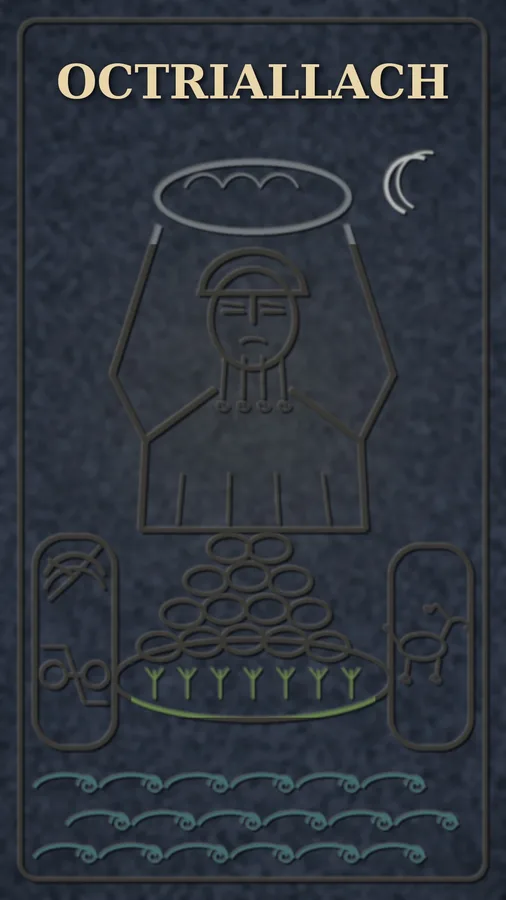
Last time: Ethniu, the bridge between two peoples. Today a Fomorian prince who stopped the enemy's dead from rising. Legend from Cath Maige Tuired (Stokes, on CELT, and on Mary Jones's site) and Lebor Gabála Érenn (Macalister, on Mary Jones's site). Not history. Told from their side.
The Name
Cath Maige Tuired writes Octriallach. Lebor Gabála writes Ochtriallach, and its poem Oichtriallach. Cath Maige Tuired calls him "son of Indech son of Dé Domnann, son of the Fomorian king". A king's son in the army that came to hold Ireland under tribute.
The Enemy's Dead Get Up Again
Picture it from the Fomorian camp. Each day you cut down the warriors of the Tuatha Dé, and the next morning they come back. Cath Maige Tuired says why: Dian Cécht, his two sons Octriuil and Miach, and his daughter Airmed sang spells over a well named Sláine. "Their mortally wounded men were cast into it as they would be slain. They were alive when they would come out."
Finding the Secret
The Fomorians sent a spy, Ruadán, son of Bres and of Brígh the Dagda's daughter, "a son and a grandson of the Tuath Dé". He told them of the smith, the wright, the brazier and "the four Leeches who were around the well". Sent back to kill Goibniu, he wounded him, but Goibniu killed him, and Brígh's keening was the first heard in Ireland. Then "Goibniu went into the well, and he became whole." Even the smith they hurt was healed.
A Stone for Every Man
So Octriallach stepped up. He "told the Fomorians that each man of them should bring a stone of the stones of Drowes to cast into the well of Slaine in Achad Abla to the west of Moytura, to the east of Loch Arboch." They did, one stone each. "Wherefore the cairn thus made is called Octriallach's Cairn." A whole army made a hill of river stones, and it took his name.
The Well of Herbs
The well had a second name, Loch Luibe, "for Diancecht put into it one of every herb (lub) that grew in Erin" (Mary Jones's text). So he buried more than water. He buried the healing art of the Tuatha Dé.
In the Great Battle
He is named with the chiefs "heartening the host of the Fomorians", beside Balor, Bres and his father Indech. Cath Maige Tuired: "Cassmael fell by Octriallach son of Indech." Lebor Gabála adds Bruidne. Both men are listed among the three satirists of the Tuatha Dé.
A Son's Loss
That day his father fell too. Cath Maige Tuired says Ogma and Indech "fell in single combat". Lebor Gabála says Ogma fell "at the hands of Indech". How Octriallach himself ended is not told in the texts used here.
Kin on Both Sides
Look at who stood around that well: the family of Dian Cécht, grandfather of Lugh, Balor's grandson. And the spy was Bres's son. This was a war between in-laws.
A Note on Sources
Every quote here comes from CELT or Mary Jones's site, listed below. The texts name Octriallach's Cairn, but they do not say where it stands today, and they do not tell how Octriallach died. If you have heard more about him elsewhere, it is not in the CELT or Mary Jones texts used here, so we leave it out.
From Their Side
Scholars often read the Fomorians as chaos and the Tuatha Dé as order. That is interpretation, not text. But Octriallach did a very ordered thing. He saw the enemy's real strength and found a plain answer: a stone from every man.
These are legends from medieval manuscripts, not recorded history.
Sources
- Cath Maige Tuired: The Second Battle of Moytura, tr. Whitley Stokes (CELT)
- The Second Battle of Mag Tured, in Cross & Slover, Ancient Irish Tales (Mary Jones)
- Lebor Gabála Érenn, part 4: the Tuatha Dé Danann, tr. R. A. S. Macalister (Mary Jones)
First shared on TikTok @johnshaw333.
Read in the Pictish Mystic app · Draw a free Pictish rune reading