Pictish Mystic · Lore · Picts
Calgacus and Mons Graupius: The Caledonii in Tacitus' Agricola
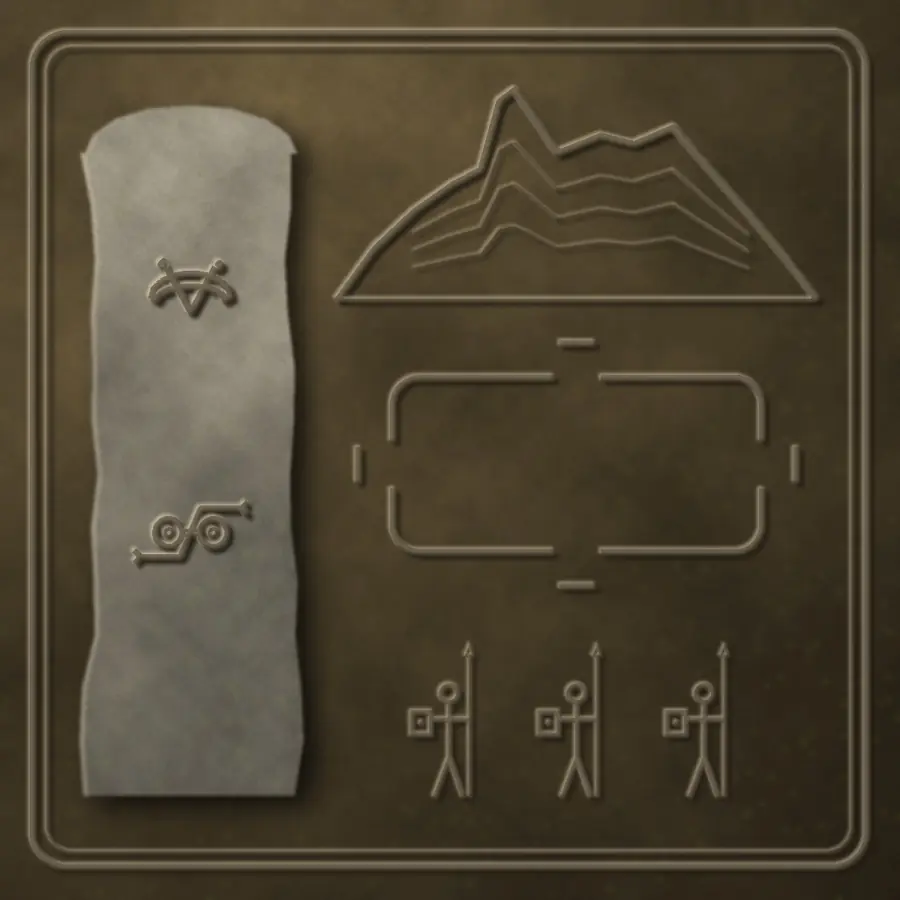
Long before anyone wrote the word Picti, a Roman senator put a speech into the mouth of a northern war leader and gave the far north of Britain its first named battle. Tacitus' Agricola, written about AD 98 in praise of his father-in-law Gnaeus Julius Agricola, tells of seven summers of campaigning, a fleet sailing round the top of Britain, and a great battle at a place called Mons Graupius against the Caledonii and their allies. This is part 11 of our Picts series: the people the Romans met in the north, the ancestors in part of the later Picts. As always, history and archaeology, legend and scholarly debate are kept apart, and the sources are named.
History (The Source: Tacitus' Agricola)
Almost everything we know of the battle comes from one short book. Tacitus was not there; he wrote fifteen years later, as Agricola's son-in-law, in a work meant to honour him. Agricola governed Britain from about AD 77 or 78, and his seventh season, the year of the battle, falls in AD 83 or 84 depending on which start date is right. In chapter 10 Tacitus describes Britain and its far north, and in chapter 11 he guesses at where its peoples came from: "the red hair and large limbs of the inhabitants of Caledonia point to a Germanic origin". That is Roman ethnography, a guess from appearance, not evidence of where anyone came from. In his fourth season (chapter 23) Agricola garrisoned the narrow neck of land between the Clota and the Bodotria, the Clyde and the Forth, and in the sixth he pushed beyond the Forth, with the fleet working along the coast beside the army.
History (The War Before the Battle)
The northern peoples fought back hard. In chapters 25 and 26 Tacitus says the Caledonians made a night attack on the Ninth Legion, which he calls the weakest, and broke into its camp before Agricola arrived with relief. In chapter 28 a cohort of Usipi, Germans recruited into the army, mutinied, seized three light warships and sailed off round the north of Britain, a strange voyage that ended in shipwreck and capture on the far side of the North Sea. Chapter 29 opens with a private grief: Agricola's own son died at the start of that summer. He sent the fleet ahead to spread fear along the coast, marched with a light-armed army, and "came to Mons Graupius", which the Britons had already occupied. Tacitus puts their strength at "more than 30,000 armed men", and says that among their many leaders one stood out for courage and birth, named Calgacus. It is the only time the name appears in any ancient source.
History (The Speech of Calgacus)
Chapters 30 to 32 give Calgacus a long speech before the battle, and it is one of the most quoted passages in Latin. He calls his people "the noblest of all Britain", living in its innermost places, "the last of the lands and of liberty", with "no people beyond us, nothing but waves and rocks". He calls the Romans "robbers of the world" and ends with the line still quoted today: "to plunder, slaughter and steal they give the false name of empire, and where they make a desert, they call it peace". Agricola answers with a speech of his own in chapters 33 and 34. Ancient historians often wrote speeches of the kind they thought fitting, and Tacitus could not have known Calgacus' words, so the speech tells us about Roman thinking on empire, not what was said on a Caledonian hillside.
History (The Battle, Chapters 35 to 38)
Agricola placed 8,000 auxiliary infantry in the centre and 3,000 cavalry on the wings, and kept the legions in reserve in front of the camp rampart, so that victory could be won without spilling Roman citizen blood. The Britons stood on rising ground, their front rank on the level and the rest rising up the slope, with chariot fighters (Tacitus' "covinnarius eques") filling the plain between. Agricola sent in four cohorts of Batavians and two of Tungrians, who closed to hand-to-hand fighting, where the Britons' huge swords without points and small shields were at a disadvantage. The Britons tried to outflank the Romans from the hilltops, but Agricola's reserve cavalry broke them. Tacitus gives about 10,000 Britons killed and 360 Romans, among them Aulus Atticus, a cohort prefect. In chapter 38 he describes the morning after: "silence everywhere, deserted hills, houses smoking in the distance". Agricola led the army into the territory of the Boresti, took hostages, and went into winter quarters, while the fleet sailed on round Britain and came to the "Trucculensian harbour". The Boresti and that harbour are named nowhere else, and their locations are unknown.
History (The Fleet, the Orcades and Thule)
In chapter 10 Tacitus says that Agricola's fleet sailed around the coast of this furthest sea and proved for the first time that Britain is an island, and at the same time "discovered and subdued" the unknown islands called the Orcades, the Orkneys. "Thule too was seen" from a distance, probably Shetland. How much "subduing" happened in Orkney is not known; it is a claim in a work of praise.
History (Ptolemy's Map of the North)
The Greek geographer Ptolemy, writing in Alexandria around AD 150 but using older material, probably from the Flavian period of Agricola's campaigns, lists the peoples of the north. He puts the Caledonii from Loch Fyne (Lemannonius Bay) to the Beauly Firth (Varar estuary), with the Caledonian Forest beyond them. South of them he puts the Vacomagi, with places called Bannatia, Tamia, Pinnata Castra and Tuesis, and the Venicones with Orrea; east of them the Taexali, with Devana and the Taexalon promontory, usually placed in the north-east of Aberdeenshire. So in Ptolemy the Caledonii are one people among several, but the Romans soon came to use "Caledonian" for the whole far north. The name lives on in Gaelic place-names: W.J. Watson (1926) explained Dunkeld, Dún Chailleann, as "fort of the Caledonians", and Schiehallion, Sìdh Chailleann, as "fairy hill of the Caledonians".
History (The Camps and Inchtuthil)
On the ground, the Roman army left its traces. The temporary marching camp at Logie Durno in Aberdeenshire was spotted from the air by J.K. St Joseph on 26 July 1975 and dug in 1975 to 1977. At about 57 to 58 hectares (around 144 acres) it is the largest Roman camp north of the Antonine Wall, big enough for a very large army, and it looks across to Bennachie and its peak, the Mither Tap. Raedykes near Stonehaven, about 38 hectares, is another candidate camp. Behind the front, the Romans built a permanent system: forts at the mouths of the Highland glens such as Drumquhassle, Malling, Dalginross and Fendoch, a line of forts, fortlets and timber watchtowers along the road on the Gask Ridge in Strathearn, and forts in Strathmore such as Cargill, Cardean and Stracathro. Woolliscroft and Hoffmann (2006) call the Gask "Rome's first frontier", older than Hadrian's Wall.
At the heart of it stood Inchtuthil on the Tay: a 21.5-hectare legionary fortress begun around AD 83, with 64 barrack blocks, a hospital and granaries, excavated by Ian Richmond and J.K. St Joseph from 1952 to 1965 and published by Pitts and St Joseph (1985). It is the only legionary fortress in the empire whose plan is known almost complete. It was never finished: the commander's house was never built. The latest coins, bronze issues of AD 86 in almost mint condition, show it was given up in 86 or early 87, probably when a legion was withdrawn from Britain for wars on the Danube. The army dismantled it and buried what it could not take: in 1960 a pit was found holding 875,400 iron nails, about seven tons, hidden so they could not be reused by the local people. In his Histories (1.2) Tacitus wrote bitterly that Britain was "completely conquered and at once let go".
History (After Agricola: Dio's Caledonii and Maeatae)
The Caledonii appear again more than a century later. The Greek historian Cassius Dio, whose books for this period survive only in a Byzantine summary by Xiphilinus, says there were two main peoples in the north: the Maeatae, who lived next to the wall that divided the island, and the Caledonians beyond them. He describes their life in the usual Roman way, as wild, tent-dwelling and unshod, which tells us as much about Roman expectations as about the north. In the 180s the governor Ulpius Marcellus fought a war across the wall, and around 197 the governor Virius Lupus had to buy peace from the Maeatae. In 208 the emperor Septimius Severus came to Britain with his sons and campaigned deep into the north until his death at York in 211; his son Caracalla made peace and the army withdrew. Dio claims the Romans lost some 50,000 men, a figure most historians treat with caution. Dio also tells of a Caledonian named Argentocoxos, "Silver Leg", whose wife answered a jibe from the empress Julia Domna by saying the women of the north "consort openly with the best men". An inscription from Colchester of about AD 230 names a man called Uepogenus, a Caledonian.
History (The Picti Appear, 297)
The word Picti first appears in a Latin speech of praise to the emperor Constantius in 297, which says that in Caesar's day the Britons had been used to fighting only "Picts and Hiberni", still half-naked. A second speech, of 310, speaks of "the woods and marshes of the Caledones and other Picts". In 368 Ammianus Marcellinus says the Picts were divided into two peoples, the Dicalydones and the Verturiones; the first name seems to echo the old Caledonii, and the second is the root of Fortriu, the Pictish kingdom we met in part 3. Older still is the name Pretani, the Pretanic Islands of the Greek travellers, the Brittonic name for the islanders that survives in Welsh Prydain and Prydyn and in the Irish Cruithin, the name used for Pictish-related people in Ulster (part 10).
Legend (Galdus and "the Grampians")
Mons Graupius has collected its own legends. The manuscripts read "Graupius", but the first printed edition of the Agricola, published in Milan around 1476 by Franciscus Puteolanus, misprinted it as "Grampius". Hector Boece, in his history of the Scots (1527), took the misprint and gave it to the great range of hills called in Gaelic Am Monadh, the Mounth, and in Blaeu's atlas of Scotland (1662 edition) they appear as the "Grampios Montes". So the Grampian Mountains are named after a printer's error, and no one knows whether the battle was fought anywhere near them. Boece went further: he turned Calgacus into "Galdus", a king of Scots who drove the Romans out after many battles and reigned for 35 years. Later writers claimed his tomb, and to this day the centre of the Torhousekie stone circle near Wigtown and the Cairnholy chambered tombs in Galloway are both called "King Galdus's tomb", though both are monuments raised thousands of years before any Roman reached the north. Galdus is not in Tacitus, Fordun or Wyntoun; he first appears in Boece.
Debate (Where Was Mons Graupius?)
No site has been proven, and Historic Environment Scotland left the battle out of its Inventory of Historic Battlefields because neither the location nor the account can be relied on. Some 29 sites have been suggested. The main candidates:
- Bennachie, Aberdeenshire, with the great camp at Logie Durno below it (J.K. St Joseph, 1978); favoured by A. Breeze (2002) and others
- Raedykes, Kempstone Hill and Megray Hill, near Stonehaven and the Elsick Mounth (William Roy, 1793, and later writers)
- Meikle Carewe Hill near Stonehaven
- Knock Hill at the Pass of Grange (A.R. Burn, 1953)
- Duncrub near Dunning, Perthshire (Skene, 1867; Watson, 1926; Feachem, 1970), from the name of a 965 battle at "Dorsum Crup"
- The Earn valley (G. Maxwell, A Battle Lost, 1990)
- Dunning and the Gask area (J.E. Fraser, 2005)
- In the 19th century almost every Roman site from Dalginross to Blairgowrie was proposed, and further north sites around the Moray Firth have also been argued.
Breeze links the name Graupius with Welsh crib, "ridge", and argues against Duncrub. Others point out that the size of Durno would fit Tacitus' army, while critics answer that marching camps are very hard to date, so Durno could belong to a different campaign, and that its identification is unproven.
Debate (Was Calgacus Real?)
Many scholars think the speech is Tacitus' own rhetoric, built on models like the Gaulish chief Critognatus in Caesar, and some wonder whether Calgacus was invented too. Others note that his name looks genuinely Brittonic: W.J. Watson and Kenneth Jackson linked it to a word for a blade or point, giving "swordsman", and other scholars prefer "piercer" or "fierce one". A real name would suggest a real leader, even if his words are Roman. The numbers are also debated: 30,000 Britons, 10,000 dead and only 360 Romans killed are figures from a work of praise, and many historians treat them with caution.
Debate (Were the Caledonii the Picts?)
J.E. Fraser (2009) warns against simply equating Tacitus' Caledonii with the later Picts. The northern peoples were regrouped under different names over two centuries, and "Picti" first appears as a Roman label in 297, perhaps a soldiers' nickname, "the painted ones". He also suggests that the "red hair" of chapter 11 may reflect dyeing or display, not ancestry. Yet the speech of 310 says "Caledones and other Picts", and the Dicalydones of 368 seem to carry the old name. Most historians see the Picts as descendants of the Caledonii and their neighbours, a people who changed and grew larger under Roman pressure, rather than newcomers.
What Remains
No battlefield, no grave, no weapon has ever been securely linked to Mons Graupius. What remains is a book, a misprinted hill name, a few great camps seen from the air, a fortress floor plan and a pit of nails, and a speech about freedom that a Roman wrote for a northern leader he never met. Through it all, the people of the north stayed: on their land, beyond the reach of the legions, where the later Pictish kingdoms would grow.
Sources
- Tacitus, Agricola (c. AD 98), chapters 10–11, 22–38, Latin text (The Latin Library) and translations; Tacitus, Histories 1.2
- Ptolemy, Geography 2.3 (c. AD 150)
- Cassius Dio, Roman History 76–77 (epitome of Xiphilinus)
- Panegyrici Latini VIII (297) and VI (310); Ammianus Marcellinus 27.8 (on 368)
- Hector Boece, Scotorum Historia (1527); J. Blaeu, Atlas Maior (1662)
- W.F. Skene, Chronicles of the Picts and Scots (1867); W.J. Watson, on the place-names of Scotland (1926)
- A.R. Burn (1953); R.W. Feachem, "Mons Graupius = Duncrub?", Antiquity (1970)
- J.K. St Joseph, "The camp at Durno, Aberdeenshire, and the site of Mons Graupius", Britannia 9 (1978)
- L.F. Pitts and J.K. St Joseph, Inchtuthil: The Roman Legionary Fortress (1985); A.S. Hobley, "The Numismatic Evidence for the Post-Agricolan Abandonment of the Roman Frontier in Northern Scotland", Britannia 20 (1989)
- W.S. Hanson, Agricola and the Conquest of the North (1987); G.S. Maxwell, A Battle Lost (1990)
- A. Breeze, "Philology on Tacitus's Graupian Hill and Trucculan Harbour", PSAS 132 (2002)
- J.E. Fraser, The Roman Conquest of Scotland: The Battle of Mons Graupius AD 84 (2005); From Caledonia to Pictland: Scotland to 795 (2009)
- D.J. Woolliscroft and B. Hoffmann, Rome's First Frontier: The Flavian Occupation of Northern Scotland (2006); The Roman Gask Project
- D.B. Campbell, Mons Graupius AD 83 (Osprey, 2010)
- R.H. Jones, Roman Camps in Scotland (Society of Antiquaries of Scotland, 2011)
- Historic Environment Scotland, Inventory of Historic Battlefields (excluded battles: Mons Graupius); Canmore entries for Logie Durno, Raedykes and Inchtuthil
History, legend and scholarly debate are marked separately in the headings above.
First shared on X @dalriada36963.
Read in the Pictish Mystic app · Draw a free Pictish rune reading