Pictish Mystic · Lore · Fomorians
More Son of Dela: the Fomorian Who Came Too Late
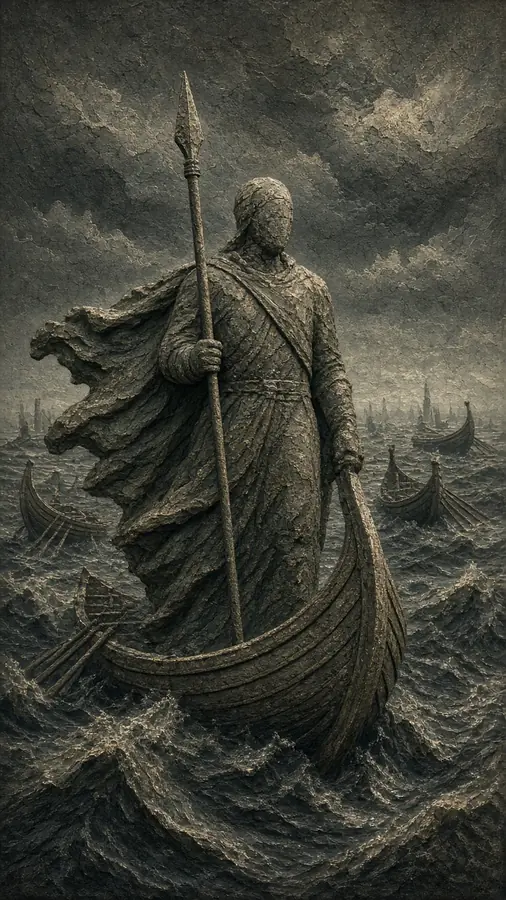
The Book of Invasions names two Fomorian lords in the age of Nemed: Conand son of Febar, and More son of Dela. Keating calls him “Morc, son of Deileadh”. This is More's story, told from the Fomorian side.
Why There Was a Tribute
Nemed had beaten the Fomorians again and again. He won the battle of Ros Fraechain against “Gand and Sengand, two kings of the Fomoraig”, and the battles of Badbgna, Cnamros and Murbolg. Keating says the oppression that followed was “revenging the battles which Neimheadh had gained over them”.
The Samhain Tribute
After Nemed died of plague, his people were “under great oppression” at the hands of More and Conand. Every Samhain, “two thirds of the progeny, the wheat, and the milk” had to be brought to Mag Cetne. Keating adds three full measures from every household in Ireland, of cream, wheat-flour and butter, to be brought to Morc and Conaing at Toirinis, with a female steward called Liagh enforcing the tax.
The Tower Falls
Then Nemed's people rose. “Thirty thousand on sea, other thirty thousand on land, these assaulted the tower. Conand and his progeny fell.”
Grave Tidings
The poem says: “More son of Dela came there, it was for a help to Conaing: Conaing fell previously, More thought it grave tidings. Three score ships over the sea was the tally with which More son of Dela came.” Keating says he brought them “from Africa to Toirinis”.
The Sea Rises
They fell in a mutual slaughter. “The sea came up over the people of Ireland, and not one of them fled from another, so severe was the battling.” Keating says they did not perceive the sea coming under them, so hard was the fighting. Of Nemed's host, only one ship of thirty warriors escaped.
The One Left Standing
Keating says what the shorter accounts leave out: everyone who was not slain was drowned, “but Morc and a few of his company who took possession of the island”. The remnant of Nemed's race who stayed “remained under servitude of the Fomorians till the time of the Firbolg”.
From Their Side
The winners' descendants wrote these texts, and to them More was an oppressor. But in their own words he answered an ally's need, crossed the sea with sixty ships, came too late, and was the one left standing when the sea had taken both hosts.
Sources
- Lebor Gabála Érenn, Part 3 (§§41–45 and the poem after them), R. A. S. Macalister's translation, on Mary Jones's Celtic Literature Collective: https://www.maryjones.us/ctexts/lebor3.html
- Geoffrey Keating, Foras Feasa ar Éirinn / The History of Ireland, translated by P. S. Dinneen, CELT: https://celt.ucc.ie/published/T100054.html
Story told by John.
These are legends from medieval manuscripts, not recorded history.
First shared on TikTok @johnshaw333.
Read in the Pictish Mystic app · Draw a free Pictish rune reading