Pictish Mystic · Lore · Tuatha Dé Danann
Nuada of the Silver Arm
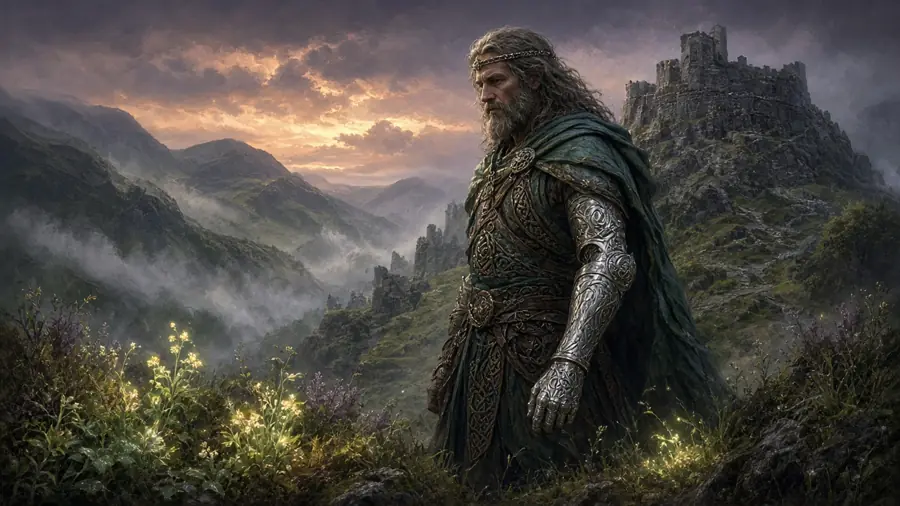
This is a legend, not recorded history. It is retold from Cath Maige Tuired (The Second Battle of Mag Tuired), a medieval Irish tale of the Tuatha Dé Danann, with a little from the account of the first battle.
He lost an arm, a crown and nearly a kingdom, and a healer's jealousy cost Ireland the cure for every ill.
At the First Battle of Mag Tuired the Tuatha Dé Danann won Ireland from the Fir Bolg, but their king paid dearly. Nuada's arm was struck off by the champion Sreng, and by the old law a king had to be unblemished. The crown passed to Bres the Beautiful, half Fomorian, who starved the halls of Tara: no smoke from his chimneys, no ale on his tables, no welcome for poets. Even the Dagda was set to digging ditches. At last the poet Cairbre sang a satire so cutting that blotches rose on Bres's face, and his reign began to crumble.
Meanwhile Dian Cécht, physician of the gods, made Nuada an arm of silver with the help of Credne the brazier, every finger moving like a living hand. But Dian Cécht's son Miach went further. He took Nuada's own arm, set it to the shoulder and chanted over it, "joint to joint and sinew to sinew," for three times three days and nights until the flesh grew whole. The father could not bear to be surpassed. He struck Miach with a sword, and the boy healed himself. He struck again, and again Miach healed. On the fourth blow he cut through to the brain, and Miach died.
From Miach's grave grew 365 herbs, one for every joint and sinew of the body. His sister Airmed gathered them on her cloak and sorted each by its power, but Dian Cécht overturned the cloak and scattered them, so no one has known their true healing since. Nuada, made whole, took back the kingship and led his people until the coming of Lugh and the great reckoning with the Fomorians. The Tuatha were never truly beaten. They withdrew into the hollow hills, and the old tales say they wait there still for the day the veil grows thin enough for them to return.
Legend note: the tale survives in medieval Irish manuscripts and was written down many centuries after the events it describes. At Pictish Mystic these stories sit beside the Pictish inspired runes as part of the old lore of these islands.
These are legends from medieval manuscripts, not recorded history.
Read in the Pictish Mystic app · Draw a free Pictish rune reading