Pictish Mystic · Lore · Fomorians
Bres – The Beautiful Half-Fomorian King
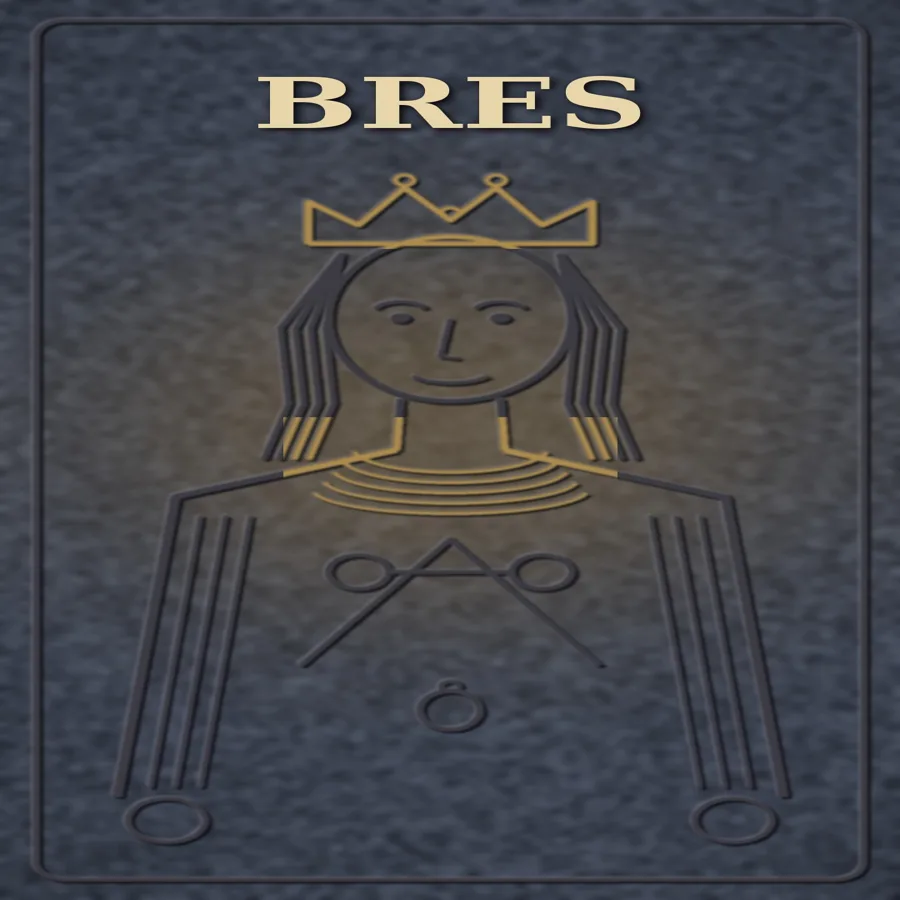
Today the son who sat on both thrones. Legend from Cath Maige Tuired and Lebor Gabála — not history. Here is Bres's side.
The Name
Eochu Bres — Eochu the Beautiful. Cath Maige Tuired (Gray, CELT): every beautiful thing in Ireland — plain and fortress, ale and candle, woman and man and horse — would be judged against that boy. People would say, "It is a Bres." Beauty was his birthright. Hospitality would be his undoing.
How He Came
Ériu, daughter of Delbáeth, watched a calm sea from Máeth Scéni. A silver vessel brought Elatha mac Delbaith, king of the Fomoire: golden hair, cloak with gold bands, five gold circlets at his neck. He left a gold ring never to be sold or given — only to the finger it fitted. Their son grew twice as fast: a week after birth he had a fortnight's growth; at seven, the size of fourteen. From his side: a bridge-child of two peoples, not a stranger.
Why They Made Him King
After the First Battle of Mag Tuired, Núadu lost his hand to Sreng. A blemished king could not rule. The Tuatha Dé gave the sovereignty to their adopted son Bres to knit alliance with the Fomoire. He gave seven guarantors from his mother's people. The Dagda built Dún mBrese. Lebor Gabála keeps the same seven-year reign until Núadu's arm was healed. One LG tradition lists Bress among Elada's five sons with the Dagda and Ogma — a double genealogy scholars still unpack. Kin on every side.
The Charge (and the other view)
Three Fomorian kings — Indech, Elatha, and Tethra — put tribute on Ireland: not a smoke from a house free of it. Ogma hauled firewood from Clew Bay; the sea took two-thirds of his load. The Dagda dug ramparts. Knives came ungreased; breaths did not smell of ale. Coirpre son of Étain got a narrow black house, no fire, three dry cakes. He made Ireland's first satire: "Without food quickly on a dish… let that be Bres's condition." Blight followed; a blemished king had to go. From Bres's side: the half-outsider asked to hold two peoples together, then cast out for failing feast-laws.
The Ring And His Father
He asked seven years' delay, then went to his mother. On the shore the ring fitted only him. At Elatha's assembly, when Bres raised his sword, his father saw the ring. Elatha's verdict was hard and fair: "Better their prosperity than their kingship. Better their requests than their curses." Bres confessed his injustice. Elatha would not win Ireland by wrong. He sent his son to Balor and Indech — and a bridge of ships was made from the Hebrides to Ireland.
Bríg And Rúadán
Bres's wife was Bríg, daughter of the Dagda — marriage, not only war. Their son Rúadán spied the smithy and healing well, wounded Goibniu, and died by the spear cast back. Bríg keened: shriek first, weeping after. Cath Maige Tuired says weeping and shrieking were first heard in Ireland then.
How He Was Spared
They found a chance to kill him. He offered cows always in milk — refused. A harvest every quarter — refused. Then the secret that saved him: plough, sow and reap on a Tuesday. William Sayers has weighed that bargain; Mary Banks tied the Tuesday line to older seasonal lore. A shorter satire-text (Vernam Hull) says Bres fell in battle — manuscripts disagree. The main tale keeps him alive holding the knowledge of the land.
Scholars
Ó Cathasaigh reads it as exemplary myth: how a king must feast and pay. McCone sets poet against satirist. Gray maps its structure. From the Fomorian angle: Bres is alliance when it works and when it fails — beauty, kinship, tribute, and the hard lesson his father spoke aloud.
Still In The Tale
Dún mBrese. Clew Bay. The ring that fitted only one finger.
These are legends from medieval manuscripts, not recorded history.
First shared on TikTok @johnshaw333.
Read in the Pictish Mystic app · Draw a free Pictish rune reading