Pictish Mystic · Lore · Fomorians
Indech – King of the Fomoire, Son of the Deep
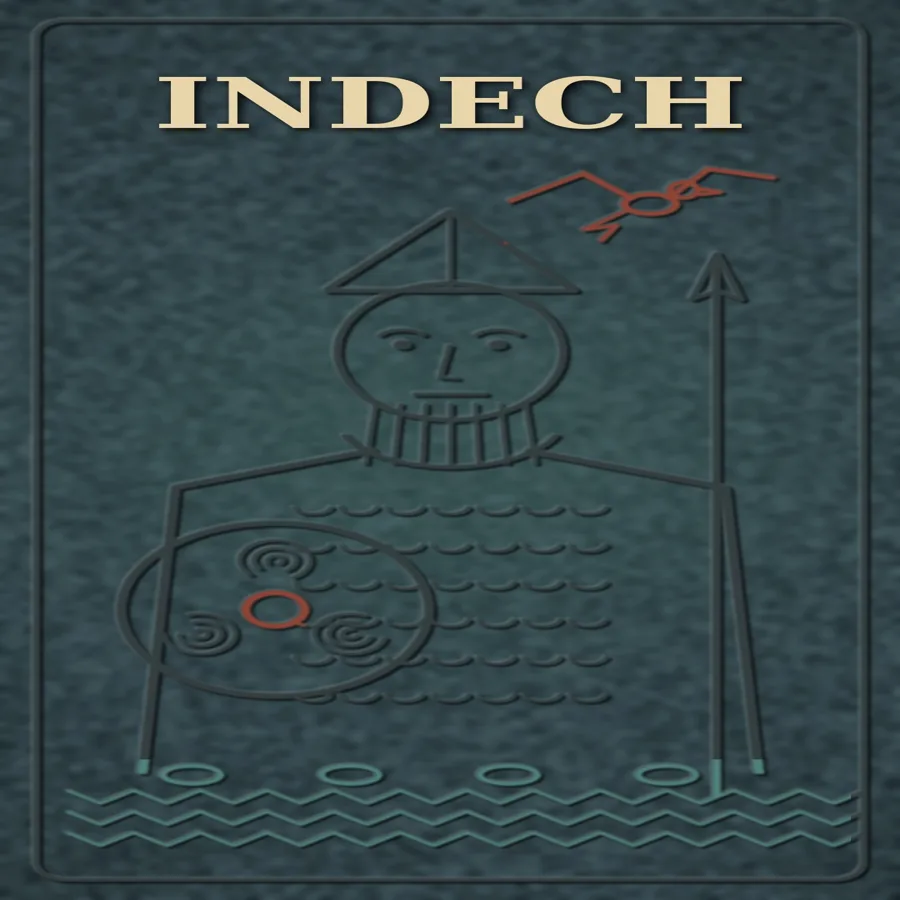
Today the king who led the Fomorian host at Mag Tuired. Legend from Cath Maige Tuired (Gray’s translation, CELT; Stokes 1891) and Lebor Gabála. Not history. Told from their side.
The Name
Indech mac Dé Domnann – “Indech son of the goddess Domnu.” The form copies Túatha Dé Danann, “people of the goddess Danu.” John Rhys (Hibbert Lectures, 1886) linked Domnu to Celtic words for “deep” and to the Fir Domnann, and through them to the Dumnonii of Roman Britain – one people by the Severn Sea, one in what is now Scotland. MacCulloch (1911) called Domnu a goddess of the deep, the underworld more than the sea. Those are scholars’ readings, not proven facts. But if they’re right, the Fomoire had a divine mother of their own.
The Tribute Kings
When Bres took the kingship, three Fomorian kings laid tribute on Ireland: Indech mac Dé Domnann, Elatha mac Delbaith and Tethra. Not a smoke rose from a house that wasn’t taxed. When Bres was cast out, Elatha sent him to Balor of the Hebrides and to Indech, “king of the Fomoire.” Together they gathered every force from Lochlainn westward and made a bridge of ships from the Hebrides to Ireland.
The Dagda’s Porridge
Before the battle the Dagda came to Indech’s camp under truce. They filled the king’s cauldron, five fists deep, with eighty gallons of milk, meal and fat, goats, sheep and swine, poured it into a pit, and Indech told him he’d be killed unless he ate it all, so he couldn’t satirise the Fomoire. He ate it. From their side, that was a host-king testing a spy, with hospitality as a weapon.
Indech’s Daughter
On the way back the Dagda met a girl who wrestled him into the ground: “I am the daughter of Indech, son of Dé Domnann.” She swore she’d be a stone at every ford and a giant oak in every pass he crossed. He said his heel-mark would stay on every stone and his axe-mark in every oak. Then the text has her promise to hinder her father’s host with spells. The tale leaves her unnamed.
The Morrígan At The Unshin
At Samhain the Morrígan met the Dagda at the River Unshin in Co. Sligo. She said she would go into Scétne and destroy Indech, taking “the blood of his heart and the kidneys of his valour.” She gave two handfuls of that blood to the hosts at the ford, and it was called the Ford of Destruction. The magic of the war was aimed at Indech first.
His Son’s Cairn
The Túatha Dé were reviving their slain in the well Sláine. Indech’s son Ochtríallach had every Fomorian carry a stone from the River Drowes, on today’s Donegal–Leitrim border, and cast it into the well. The tale says the place was called Ochtríallach’s Cairn. He killed Casmáel in the battle.
The Fall
When Lug’s sling-stone took Balor’s eye, Balor fell and his head struck Indech’s breast, so blood gushed over his lips. Indech called his poet Lóch Lethglas, “half-green,” to find who had thrown it. Then the battle broke. “Ogma son of Elatha and Indech mac Dé Domnann fell together in single combat.” Some later summaries, like MacCulloch’s (1911), have Ogma kill Indech, then die of the wounds Indech gave him. The king and his rival’s champion died as equals.
Scholars
Older scholars like Rhys and MacCulloch read the Fomoire as dark or blighting powers of nature. Later scholars such as Elizabeth Gray read Cath Maige Tuired as a story about kingship and society more than a nature myth. From the Fomorian side, Indech is no monster: a king with a poet, a daughter and a son, who answered his ally’s call and paid with the blood of his heart.
Still On The Map
The Unshin. The Drowes. Moytirra by Lough Arrow.
These are legends from medieval manuscripts, not recorded history.
First shared on TikTok @johnshaw333.
Read in the Pictish Mystic app · Draw a free Pictish rune reading