Pictish Mystic · Lore · Fomorians
Tethra – Fomorian King of the Sea, the Crow and the Síd
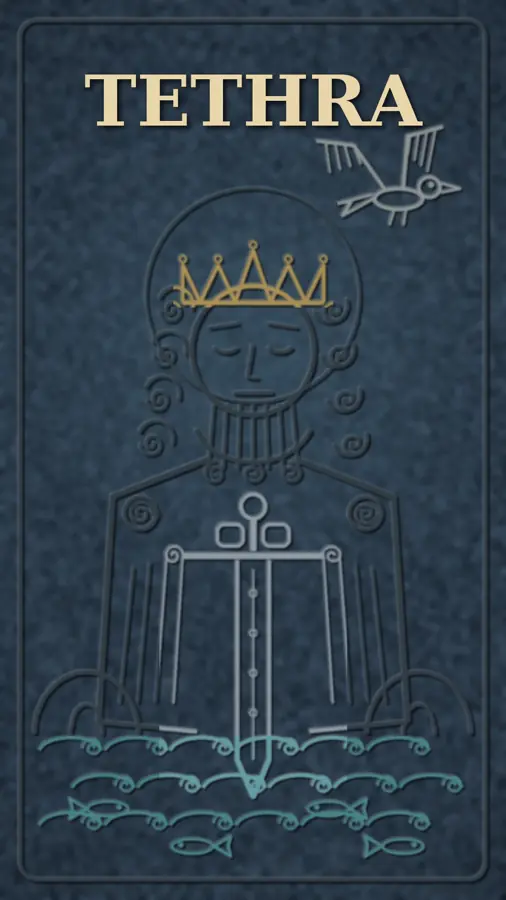
Yesterday: Indech. Today the third tribute king, the one whose sword spoke. Legend from Cath Maige Tuired (Gray, CELT), Tochmarc Emire (Meyer), Echtra Condla and the old glossaries. Not history. Told from their side.
The Name
Tethra is a real Old Irish word. Mícheál Ó Cléirigh’s glossary (1643) explains teathra as “badhb no feanóg”, scald-crow or hooded crow, and also as “muir”, the sea. Cormac’s Glossary calls Tethra “the name of a king of the Fomoire” and quotes the Colloquy of the Two Sages: “among Tethra’s mighty men.” Crow and sea in one name.
The Third Tribute King
Cath Maige Tuired names three Fomorian kings who laid tribute on Ireland under Bres: Indech mac Dé Domnann, Elatha mac Delbaith, and Tethra. The other two get a father’s name. Tethra stands alone.
His Sons in the Síd
When Indech’s daughter barred the Dagda’s road, she swore he would not pass “until I summon the sons of Tethra from the síd-mounds” (Gray). Tethra’s sons live in the hollow hills, the same síd where Ireland’s otherworld folk dwell.
Orna, the Sword That Spoke
After the battle Ogma found Orna, “the sword of Tethra, king of the Fomoire.” He unsheathed it and cleaned it, and the sword told all that had been done by it, for swords then recounted their deeds when unsheathed. Hence, says the tale, swords are owed “the tribute of cleaning”, and spells are kept in swords. The monk adds that demons spoke from weapons because men worshipped weapons. Lóch Lethglas, Indech’s poet, chanted a poem on Orna, so obscure that Stokes and Gray both left it untranslated. The tale never says how Tethra died. Only his sword is left on the field.
Tethra’s Cattle
In Tochmarc Emire, Cú Chulainn tells Emer in riddles that he slept “in the house of the man who tends the cattle of the plain of Tethra.” Later he explains: Roncu, Conchobor’s fisherman, for “the fish are the cattle of the sea, and the sea is the plain of Tethra, a king of the kings of the Fomori.” Amairgen’s song in Lebor Gabála asks about Tethra’s cattle too (“Cia buar Tethrach tibi”); translators still argue over who smiles at whom.
Emer’s Great-Uncle
The same tale makes Emer’s father, Forgall the Wily, “the nephew of Tethra, king of the Fomori”, his sister’s son. So Cú Chulainn of Ulster married Tethra’s great-niece. One of Emer’s guards is “Lath Goible, son of Tethra”, and the Glen of the Great Dam in Brega is named from Dam Díle, son of Smirgoll, son of Tethra.
The Battle-Crow’s Husband?
A line in Lebor na hUidre speaks of “mían mná Tethrach”, the desire of Tethra’s woman, glossed badb, the battle-crow. MacCulloch (1911) took Tethra as husband of the war-goddess Badb. eDIL also reads it “the scaldcrow woman”. Both readings stand.
King of the Dead? (the debate)
In Echtra Condla the woman from the otherworld tells Connla: “The living, the immortal call to you; they summon you to the people of Tethra.” Henri d’Arbois de Jubainville argued that after Mag Tuired Tethra, like Kronos, withdrew to the otherworld to rule the dead. That is where the “king of the dead” label comes from. MacCulloch rejected it: “Tethra’s mighty men” was a stock phrase for warriors, and otherworld rulers are never Fomorian. The same tale names Mag Mell’s king: Boadag the Eternal. eDIL even reads the line “to the people of the sea.” A scholar’s theory, not manuscript fact.
From Their Side
No death scene, no lament. Yet the sea became his plain, fish his cattle, his sons live in the síd, his blood runs in Emer’s line, and his sword still talks. The winners kept his name in their poetry.
Still in the Texts
Mag Tethrai, the sea. Brega’s Glen of the Great Dam. Luglochta Loga, Emer’s home.
These are legends from medieval manuscripts, not recorded history.
First shared on TikTok @johnshaw333.
Read in the Pictish Mystic app · Draw a free Pictish rune reading